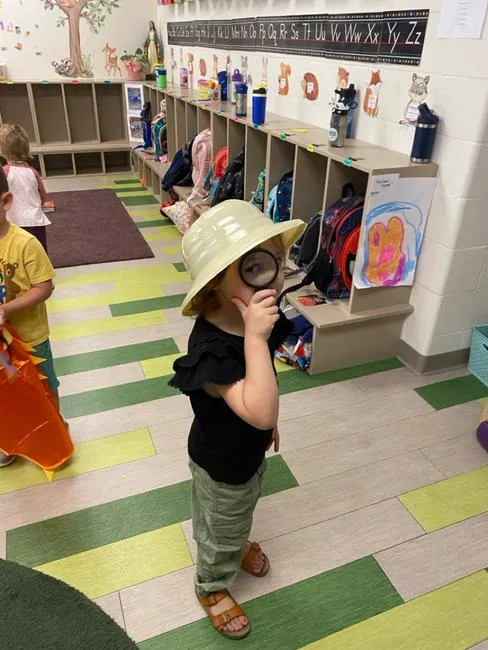
The Power of Play
There's an episode of Bluey called "Octopus" that demonstrates the power of play and imagination. In the episode, Chloe, a friend of Bluey's, comes over to the Heeler house for a playdate. As usual, Bandit, Bluey's dad, is a bit of a ham. He plays a game of pretend with the girls where he assumes the role of an octopus. The girls erupt in giggles at Bandit's antics as a willy-nilly octopus. When Chloe goes home, she assumes that her dad will also be a silly octopus with her. Only that's not her father's personality. He struggles with the silly playscape, leaving Chloe disappointed. What stuck out to me, as a mother and educator, was that Chloe's dad didn't give up. Instead, he reframed the experience into something he is more comfortable with, sharing his passion for research. They researched octopus and together they found their own unique way to play. It seems so simple: play with your children. But for some of us parents, that can be a bit difficult! We're stressed! There's dinner to make, practices to run to, jobs to juggle, not to mention all the other stresses of being a parent! Who has time for silliness and nonsense?
The fact is: play is important!
At St. Francis, we believe play is one of the most important parts of a child’s education. While it may look like fun, play is the foundation of learning. It shapes children’s growth in every area—cognitive, language and literacy, physical, social, and emotional.
Children Learn Through Play
When children play, they are learning:
Cognitive skills – stacking blocks to build the tallest tower
Language skills – learning new words while acting out play scenarios
Literacy skills – writing an appointment in a pretend dentist’s office
Physical abilities – running on the playground or gluing a collage
Social skills – cooperating in a pretend car wash as workers and customers
Emotional skills – waiting patiently for a turn as the bus driver
Play is their classroom, their lab, and their world.
Play Promotes Health and Well-Being
Active play keeps children strong, improves coordination, and can even help prevent childhood obesity. Just as important, play reduces stress. Children who engage in joyful play are better able to process emotions and manage anxiety.
The Importance of Outdoor Play
Some of the best learning happens outside. From building forts to sledding in the snow, outdoor play sparks creativity, resilience, and teamwork. Our students play in our outdoor playground facility throughout the school year (unless the weather isn't cooperating.) We also have an outdoor classroom space that allows students to be hands-on, loud, and engaged
Play and Learning Go Hand-in-Hand
At St. Francis, we see play and learning as inseparable. Just as science lectures need labs, children need play to test and apply what they know. For example, in a pretend restaurant, children may:
Write and design menus
Set prices
Take orders
Act out roles as chefs, servers, and customers
In just one play scenario, children practice literacy, math, communication, and problem-solving—all while having fun.
Tips for Parents: Supporting Play at Home
You can nurture your child’s development by making time for unstructured play every day. And don't worry about being silly! Remember that Chloe's dad in that episode of Bluey found a way to make play a valued moment for both he and his daughter.
Here are a few ideas:
Create a play-friendly space with open-ended toys like blocks, dress-up clothes, or art supplies.
Encourage outdoor play—whether it’s riding bikes, making snow angels, or running through sprinklers.
Join in sometimes—children love when parents enter their imaginative worlds, even for a few minutes.
Value downtime—overscheduling can limit creativity; allow space for free play.
Talk about play—ask your child what they built, imagined, or pretended today.


